 2
|
2
|
 1
|
1
|
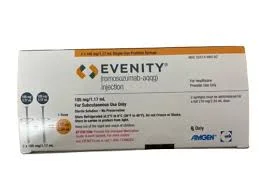
ROMOSOZUMAB (EVENITY)
sclerostin inhibitor | dual anabolic and antiresorptive | monoclonal antibody
Amgen and UCB Pharma | FDA approved April 2019
____________________________________________________________
[1] Cosman F et al. (2016) NEJM. FRAME trial: romosozumab vs placebo
[2] Saag KG et al. (2017) NEJM. ARCH trial: romosozumab vs alendronate
[3] Langdahl BL et al. (2017) Lancet. Romosozumab vs teriparatide after bisphosphonate
[4] Lim SY, Bolster MB. (2022) Int J Womens Health. Clinical utility of romosozumab: patient selection
[5] Fuggle NR et al. (2023) Curr Osteoporos Rep. Sclerostin and cardiovascular disease
[7] StatPearls (2024) Romosozumab. NCBI Bookshelf
[8] NCBI Bookshelf. Clinical Review: Romosozumab (Evenity)
[9] Reginster JY et al. (2024) J Endocrinol Invest. Romosozumab practical clinical issues and sequencing
[10] Eriksen EF et al. (2022) JBMR. Modeling-based bone formation after 2 months romosozumab: FRAME data
____________________________________________________________
CONTENTS
01 what is romosozumab and what is sclerostin
02 mechanism the Wnt pathway and why dual action matters
03 what romosozumab does to bone markers and architecture
04 FRAME trial romosozumab vs placebo
05 ARCH trial romosozumab vs alendronate the pivotal evidence
06 the cardiovascular signal what happened in ARCH and what it means
07 the biology of cardiovascular risk why sclerostin inhibition could matter
08 BRIDGE trial romosozumab in men
09 romosozumab vs teriparatide after bisphosphonate Lancet 2017
10 sequencing before and after romosozumab
11 dosing administration monitoring
12 contraindications who must not receive this drug
13 romosozumab vs the full treatment landscape
14 verdict
____________________________________________________________
01 WHAT IS ROMOSOZUMAB AND WHAT IS SCLEROSTIN
Romosozumab is a humanized monoclonal antibody (IgG2) that binds to and
inhibits sclerostin. It was co-developed by Amgen and UCB Pharma and
approved by the FDA in April 2019 under the brand name Evenity.
It is the only approved drug in clinical practice that simultaneously
increases bone formation AND decreases bone resorption.
Every other bone drug does one or the other. Not both.
____________________________________________________________
SCLEROSTIN THE TARGET
Sclerostin is a glycoprotein encoded by the SOST gene on chromosome 17q21.
It is produced almost exclusively by osteocytes, the most abundant bone cell
type, which are embedded within the bone matrix and act as mechanosensors.
Sclerostin's primary function: inhibit the Wnt/beta-catenin signalling
pathway by binding to the LRP5/LRP6 co-receptors and preventing Wnt
ligands from activating them. When sclerostin is high, Wnt is suppressed,
osteoblast activity falls, and bone formation slows.
Sclerostin acts as the skeleton's internal brake on bone formation.
It rises with aging, disuse, and estrogen loss. These are exactly the
conditions under which osteoporosis develops.
____________________________________________________________
THE GENETIC PROOF OF CONCEPT
Two rare human genetic conditions provided the proof before the drug existed:
Sclerosteosis SOST gene loss-of-function. No sclerostin produced.
Result: dramatically elevated bone mass, extremely dense skeleton,
no fragility fractures throughout life. Serious engineering problem
(nerve compression, skull thickening) but bone mass is remarkable.
Van Buchem disease partial SOST deletion. Reduced sclerostin.
Similar high bone mass phenotype, milder presentation.
Both conditions demonstrated that humans with no or reduced sclerostin have
dramatically stronger bones. Neither condition showed increased fracture risk.
This was the clinical hypothesis that drove romosozumab development.
____________________________________________________________
BASIC DRUG FACTS
Type humanized monoclonal antibody, IgG2 isotype
Target sclerostin (SOST gene product)
Dose 210 mg subcutaneous injection monthly for 12 months
Administration two consecutive 105 mg injections per visit
Treatment duration 12 months only. Not extended.
FDA approval April 9, 2019
Indication postmenopausal women at high fracture risk
Manufacturer Amgen and UCB Pharma
List price (2024) approximately $21,000-$24,000 per year
Box warning myocardial infarction, stroke, and cardiovascular death
____________________________________________________________
02 MECHANISM THE Wnt PATHWAY AND WHY DUAL ACTION MATTERS
Romosozumab works by removing the brake on Wnt/beta-catenin signalling
in bone. This single action produces two simultaneous effects because
Wnt signalling controls both sides of the bone remodelling cycle.
____________________________________________________________
HOW WNT SIGNALLING NORMALLY WORKS IN BONE
Wnt ligands bind to Frizzled receptors plus LRP5/LRP6 co-receptors
on osteoblast precursors. This stabilises beta-catenin inside the cell,
which translocates to the nucleus and activates transcription of genes
driving osteoblast differentiation, proliferation, and survival.
Sclerostin intercepts this by binding LRP5/LRP6 directly, blocking
Wnt from engaging its co-receptor. No LRP binding, no beta-catenin
stabilisation, no osteoblast gene activation. Pathway stays off.
Romosozumab binds sclerostin and prevents it from binding LRP5/LRP6.
Wnt can now engage its co-receptor. Pathway activates. Bone forms.
____________________________________________________________
THE DUAL MECHANISM ANABOLIC AND ANTIRESORPTIVE SIMULTANEOUSLY
SIDE 1 INCREASED BONE FORMATION (anabolic)
Wnt/beta-catenin activation in osteoblast precursors drives:
osteoblast differentiation from MSC progenitors
osteoblast proliferation and extended lifespan
increased collagen I synthesis and bone matrix deposition
stimulation of bone modeling (formation on quiescent surfaces)
P1NP rises sharply within 2 weeks of first dose
formation effect is most pronounced in months 1-6, wanes by month 9-12
SIDE 2 DECREASED BONE RESORPTION (antiresorptive)
Wnt activation in osteoblasts increases OPG production.
OPG (osteoprotegerin) is a decoy receptor for RANKL.
More OPG means less RANKL available to bind RANK on osteoclast precursors.
Fewer RANK-RANKL interactions means fewer mature osteoclasts formed.
Wnt activation also reduces osteoblast expression of RANKL directly.
CTX (bone resorption marker) falls within 2 weeks of first dose.
WHY THIS COMBINATION IS PHARMACOLOGICALLY UNIQUE
Teriparatide and abaloparatide: increase both formation AND resorption.
Net gain is positive but resorption partially offsets the anabolic effect.
Bisphosphonates, denosumab: decrease resorption only. No formation increase.
You preserve what you have. You do not build more.
Romosozumab: increases formation AND decreases resorption simultaneously.
Both sides of the equation move in the right direction at the same time.
This produces BMD gains that exceed every other approved osteoporosis drug.
____________________________________________________________
03 WHAT ROMOSOZUMAB DOES TO BONE MARKERS AND ARCHITECTURE
BONE TURNOVER MARKERS TIME COURSE
P1NP (formation marker) rises within 2 weeks. peak at approximately month 2.
returns toward baseline by month 9-12 of treatment.
The anabolic effect is front-loaded in the first 6 months.
CTX (resorption marker) falls within 2 weeks of first dose.
remains suppressed throughout 12-month treatment course.
The antiresorptive effect persists throughout treatment.
Net effect over 12 months: formation dominates early, both pathways
converge toward suppression of resorption with continued treatment.
Eriksen et al. 2022 (JBMR): modeling-based bone formation confirmed on
bone biopsies as early as 2 months from FRAME trial samples.
____________________________________________________________
BMD GAINS COMPARED TO OTHER AGENTS
Romosozumab produces the largest BMD gains of any approved osteoporosis agent.
Lumbar spine BMD at 12 months:
romosozumab +13.3% from baseline (FRAME) / +13.7% (ARCH)
teriparatide +9.7% at 18-21 months (FPT)
denosumab +5.8% at 36 months
alendronate +5.4% at 36 months
Total hip BMD at 12 months:
romosozumab +6.9% (FRAME) / +6.2% (ARCH)
teriparatide +2.8% (FPT)
denosumab +3.4% at 36 months
These gains are achieved in 12 months. Not 3 years.
____________________________________________________________
BONE ARCHITECTURE
Animal studies and human biopsy data: romosozumab increases trabecular
and cortical bone mass, improves cortical thickness, and enhances
trabecular connectivity. Both bone quality metrics and mass improve.
Unlike antiresorptives which preserve existing architecture, romosozumab
builds new structural bone on trabecular surfaces and periosteal surfaces.
____________________________________________________________
04 FRAME TRIAL ROMOSOZUMAB VS PLACEBO
Cosman F et al. N Engl J Med 2016;375:1532-1543.
NCT01575834. Amgen and UCB Pharma sponsored.
7,180 postmenopausal women with osteoporosis (T-score -2.5 to -3.5).
Mean age 71 years. 12 months romosozumab 210 mg monthly vs placebo.
All patients then transitioned to denosumab 60 mg every 6 months for 12 months.
____________________________________________________________
AT 12 MONTHS VS PLACEBO
new vertebral fractures 73% reduction (0.5% vs 1.8%, p<0.001)
clinical fractures 36% reduction (p<0.001)
lumbar spine BMD +13.3% romosozumab vs +0.0% placebo
total hip BMD +6.9% vs +0.0%
femoral neck BMD +5.9% vs +0.0%
MACE events balanced between groups (key: FRAME used placebo comparator)
AT 24 MONTHS (AFTER TRANSITION TO DENOSUMAB)
nonvertebral fractures 25% reduction (p=0.04)
hip fractures numerically fewer but not statistically powered
BMD gains maintained and further increased with denosumab
FRAME established the anabolic then antiresorptive sequence as the
standard approach. Gains from romosozumab are maintained and built upon
when followed immediately by denosumab.
____________________________________________________________
05 ARCH TRIAL ROMOSOZUMAB VS ALENDRONATE
Saag KG et al. N Engl J Med 2017;377:1417-1427.
NCT01631214. Amgen and UCB Pharma sponsored.
4,093 postmenopausal women with osteoporosis at higher fracture risk
than FRAME. Many had prior vertebral fractures. Mean age 74 years.
12 months romosozumab 210 mg monthly vs alendronate 70 mg weekly.
All patients then continued alendronate for 12 more months.
____________________________________________________________
AT 24 MONTHS (AFTER ALENDRONATE CONTINUATION)
new vertebral fractures 48% fewer with romosozumab then alendronate
vs alendronate alone (6.2% vs 11.9%, p<0.001)
hip fractures 38% fewer (2.0% vs 3.2%, p=0.02)
nonvertebral fractures 19% fewer (8.7% vs 10.6%, p=0.04)
clinical fractures 27% fewer (p<0.001)
THE HIP FRACTURE DATA
ARCH is one of the very few osteoporosis trials to show hip fracture
reduction in a direct active comparator RCT against an established agent.
38% hip fracture reduction vs alendronate alone is clinically significant.
Alendronate itself reduces hip fractures by approximately 50% vs placebo.
Romosozumab then alendronate is superior to alendronate alone on hip fracture.
THE CARDIOVASCULAR SIGNAL
During the 12-month double-blind period, MACE were more frequent in the
romosozumab group vs the alendronate group:
MACE overall relative risk 1.87 (romosozumab vs alendronate)
cardiac ischaemic events odds ratio 2.65 (95% CI 1.03-6.77)
cerebrovascular events odds ratio 2.27 (95% CI 0.93-5.22)
absolute numbers 41 MACE in romosozumab vs 22 in alendronate arm
This finding triggered the black box warning on the FDA label.
The FRAME trial using placebo comparator did NOT show this MACE signal.
The discrepancy between FRAME and ARCH is the core interpretive problem.
Full analysis in sections 06 and 07.
____________________________________________________________
06 THE CARDIOVASCULAR SIGNAL WHAT HAPPENED AND WHAT IT MEANS
The cardiovascular signal is the defining safety concern with romosozumab.
It requires careful interpretation because the data is genuinely ambiguous.
____________________________________________________________
THE RAW NUMBERS
ARCH trial: 41 MACE in romosozumab arm vs 22 in alendronate arm over 12 months.
Relative risk 1.87. This triggered the FDA black box warning.
FRAME trial: MACE balanced between romosozumab and placebo groups.
No cardiovascular signal in the placebo-controlled trial.
____________________________________________________________
THE THREE COMPETING INTERPRETATIONS
INTERPRETATION 1 Romosozumab genuinely increases CV risk
Sclerostin is expressed in aortic vascular smooth muscle cells (AVSM).
Its function in vasculature is proposed to inhibit vascular calcification.
Blocking sclerostin in vascular tissue may promote calcification of arterial
walls, accelerating atherosclerosis and increasing MI and stroke risk.
This is mechanistically plausible and consistent with the ARCH signal.
Genetic studies: SOST gene variants associated with both BMD and CV outcomes
in Mendelian randomisation analyses, though results are inconsistent.
INTERPRETATION 2 Alendronate is cardioprotective in ARCH
MACE rates in the alendronate group of ARCH were lower than expected
given participant age and prevalence of CV risk factors.
European Medicines Agency analysis: MACE in the alendronate arm were
approximately 25% lower than population-matched expected rates.
Bisphosphonates have independently reported cardioprotective associations
in observational data. ARCH may have had an unusually low-CV comparator arm.
This interpretation would mean romosozumab is neutral, not harmful.
INTERPRETATION 3 Statistical noise in an underpowered safety analysis
41 events vs 22 events over 12 months in a trial of 4,093 patients.
The trial was not powered to detect cardiovascular events as an endpoint.
At such small absolute numbers, chance imbalance is a real possibility.
Meta-analysis of four studies: MACE relative risk 1.14 (95% CI 0.83-1.57)
not statistically significant across the pooled dataset.
CVD-related death relative risk 0.92 (95% CI 0.53-1.59) across six studies.
____________________________________________________________
WHAT THE REGULATORS DID
FDA: approved romosozumab with a black box warning.
Warning text: Evenity should not be initiated in patients who have had a
myocardial infarction or stroke within the preceding year.
EMA: approved in EU with similar cardiovascular warnings.
Health Canada: approved with warning.
The regulatory consensus: benefit outweighs risk in the approved indication
(postmenopausal women at high fracture risk WITHOUT recent MI or stroke)
but the signal is sufficient to mandate caution and label warning.
____________________________________________________________
THE HONEST POSITION
We do not know with certainty whether romosozumab increases CV risk.
The signal emerged in one of two pivotal trials. Not both.
The mechanism is plausible but unproven in humans at clinical doses.
The pooled meta-analysis does not show statistical significance.
Long-term post-marketing CV surveillance data is still accumulating.
The drug should not be given to patients with recent MI or stroke.
In patients without recent CV events and very high fracture risk,
the fracture prevention benefit is likely to outweigh the uncertain CV risk.
____________________________________________________________
07 THE BIOLOGY OF CARDIOVASCULAR RISK WHY SCLEROSTIN MATTERS IN VESSELS
Sclerostin is not exclusively a bone protein. It is expressed in:
osteocytes (primary site)
aortic vascular smooth muscle cells (AVSM)
calcified arterial plaques
renal tubular cells
____________________________________________________________
THE VASCULAR CALCIFICATION HYPOTHESIS
Vascular smooth muscle cells can undergo osteoblastic differentiation,
a process that drives arterial calcification and is a major driver of
atherosclerosis progression and cardiovascular mortality.
Sclerostin in AVSM may inhibit this calcification process by suppressing
Wnt/beta-catenin locally in the vascular wall, preventing smooth muscle
cells from differentiating toward an osteoblastic, calcifying phenotype.
If true: blocking sclerostin everywhere (bone AND vasculature) removes
this vascular protective brake alongside the bone brake.
Wnt becomes active in arterial walls, promoting vascular calcification,
plaque instability, and increased thrombotic event risk.
____________________________________________________________
WHAT THE HUMAN GENETIC DATA SHOWS
Sclerosteosis and van Buchem patients (no/low sclerostin lifelong):
cardiovascular events have not been specifically tracked in these rare conditions.
Neither condition has reported elevated cardiovascular mortality in case series.
However, sample sizes are small and follow-up limited.
Mendelian randomisation using SOST variants:
some studies suggest genetically lower sclerostin associates with higher CV risk.
Other MR studies find no consistent effect.
Results are heterogeneous across genetic instrument choice.
____________________________________________________________
WHAT ANIMAL TOXICOLOGY SHOWED
Nonclinical cardiovascular safety package conducted by Amgen:
no evidence of vascular mineralisation in preclinical animal studies.
No increase in atherosclerosis markers in treated animals.
Reassuring but not definitive for the human clinical question.
____________________________________________________________
08 BRIDGE TRIAL ROMOSOZUMAB IN MEN
Lewiecki EM et al. J Bone Miner Res 2018;33:1183-1194.
245 men with osteoporosis. 12 months romosozumab 210 mg monthly vs placebo.
lumbar spine BMD +12.1% romosozumab vs +1.2% placebo at 12 months
total hip BMD +2.5% vs -0.5%
femoral neck BMD +2.2% vs -0.5%
MACE events 4.9% romosozumab vs 2.5% placebo (not significant but directionally consistent with ARCH)
The MACE directional trend in men (4.9% vs 2.5%) was consistent with
the ARCH signal despite BRIDGE being too small to reach significance.
This is the second trial in which MACE trended higher with romosozumab.
FDA approval for men was NOT granted based on BRIDGE alone.
Romosozumab is currently approved for postmenopausal women only in the US.
____________________________________________________________
09 ROMOSOZUMAB VS TERIPARATIDE AFTER BISPHOSPHONATE LANCET 2017
Langdahl BL et al. Lancet 2017;390:1585-1594.
436 postmenopausal women who had been on oral bisphosphonates for at
least 3 years. Open-label. 12 months romosozumab vs 12 months teriparatide.
____________________________________________________________
AT 12 MONTHS
lumbar spine BMD +9.8% romosozumab vs +5.4% teriparatide
total hip BMD +2.9% romosozumab vs -0.5% teriparatide
femoral neck BMD +4.1% romosozumab vs +0.3% teriparatide
THE CRITICAL FINDING ON TERIPARATIDE AFTER BISPHOSPHONATE
Teriparatide produced a DECREASE in hip BMD when initiated after
bisphosphonate therapy. Total hip: -0.5%. This is the bisphosphonate
blunting effect on PTH anabolic response, demonstrating that prior
antiresorptive suppression limits teriparatide's anabolic ceiling.
Romosozumab increased total hip BMD by +2.9% in the same patient population.
Wnt pathway activation is not blunted by prior bisphosphonate use.
Practical implication: in patients transitioning from bisphosphonate therapy
to an anabolic agent, romosozumab may produce superior hip BMD gains
compared to teriparatide. This is the clinical scenario where the
mechanistic difference between these drugs is most practically relevant.
____________________________________________________________
10 SEQUENCING BEFORE AND AFTER ROMOSOZUMAB
Sequencing decisions with romosozumab are critical and well-evidenced.
____________________________________________________________
WHAT MUST COME AFTER ROMOSOZUMAB
Romosozumab must be followed immediately by an antiresorptive agent.
When treatment stops without a follow-on drug, BMD declines rapidly
and fracture risk increases. The anabolic gains are not self-sustaining.
Best follow-on options (in order of evidence):
denosumab largest additional BMD gains post-romosozumab (FRAME data)
zoledronic acid IV bisphosphonate, good maintenance of gains
oral bisphosphonate alendronate or risedronate if IV not appropriate
ARCH sequence: romosozumab 12 months then alendronate 12 months.
This achieved superior fracture outcomes vs alendronate alone for 24 months.
FRAME sequence: romosozumab 12 months then denosumab 12 months.
BMD continued to increase through month 24 (formation plus antiresorptive).
____________________________________________________________
ROMOSOZUMAB AFTER DENOSUMAB DO NOT DO THIS
There is no published evidence supporting romosozumab after denosumab.
The concern is rebound vertebral fractures if denosumab is stopped
without proper antiresorptive bridging before any drug switch.
Correct sequence: denosumab to bisphosphonate, then evaluate options.
Do not transition directly from denosumab to romosozumab.
____________________________________________________________
ROMOSOZUMAB AFTER BISPHOSPHONATE
Langdahl 2017 Lancet: romosozumab produces meaningful BMD gains after
bisphosphonate therapy, including at the hip (unlike teriparatide).
Prior bisphosphonate use does not blunt the romosozumab response.
This is a meaningful clinical advantage over PTH analogs in this population.
____________________________________________________________
ROMOSOZUMAB AS FIRST-LINE IN VERY HIGH RISK
2022 AACE guidelines and emerging evidence: anabolic-first approach preferred
in patients at very high fracture risk (T-score below -3.0, prior fractures,
multiple risk factors). Romosozumab or teriparatide before antiresorptive.
The anabolic window builds a structural reserve that antiresorptives then protect.
McClung et al. 2023: romosozumab efficacy confirmed in women with no prior
fracture who fulfill very high fracture risk criteria.
____________________________________________________________
11 DOSING ADMINISTRATION MONITORING
DOSING
dose 210 mg subcutaneous injection once monthly
delivery two consecutive 105 mg injections per visit
administer into abdomen, thigh, or upper arm
rotate sites between injections at same visit
duration 12 months only. Strict limit. Not extended beyond 12 months.
supplement calcium 1000 mg/day and vitamin D 800 IU/day during treatment
____________________________________________________________
PHARMACOKINETICS
absorption SC bioavailability approximately 82%
Tmax approximately 5 days after injection
half-life approximately 12.8 days
clearance primarily via nonlinear target-mediated drug disposition
P1NP effect rises within 2 weeks of first dose
CTX effect suppressed within 2 weeks of first dose
____________________________________________________________
MONITORING
serum calcium check before each injection in renally impaired patients
P1NP rise at 1-2 months confirms pharmacological response
CTX should fall early and remain suppressed
DXA at baseline and 12 months (end of treatment)
cardiovascular history full CV risk assessment before first dose
document absence of MI or stroke within preceding year
____________________________________________________________
COMMON SIDE EFFECTS
injection site reactions most common. mild and transient.
arthralgia reported in approximately 12% of patients
headache reported in approximately 8% of patients
hypocalcaemia rare but important in renal impairment
hypersensitivity rare. angioedema and urticaria reported.
____________________________________________________________
12 CONTRAINDICATIONS WHO MUST NOT RECEIVE THIS DRUG
ABSOLUTE CONTRAINDICATIONS
myocardial infarction within the preceding 12 months
stroke within the preceding 12 months
hypocalcaemia (correct before initiating)
hypersensitivity to romosozumab
____________________________________________________________
RELATIVE CONTRAINDICATIONS USE WITH CAUTION
history of MI or stroke beyond 12 months: risk-benefit discussion required
pre-existing cardiovascular disease: careful assessment required
CKD stages G4-G5: calcium and phosphate balance must be evaluated
hypoparathyroidism: increased hypocalcaemia risk
prior dental procedures or ONJ risk factors: same precautions as other anabolics
____________________________________________________________
NOT APPROVED FOR
men with osteoporosis (US label. Approved in EU for men.)
glucocorticoid-induced osteoporosis (no approved indication)
premenopausal women (no data, not approved)
children and adolescents (not approved)
____________________________________________________________
13 ROMOSOZUMAB VS THE FULL TREATMENT LANDSCAPE
BISPHOSPHONATES (alendronate, zoledronic acid, risedronate)
mechanism antiresorptive only (slow osteoclasts)
evidence decades of RCT data. hip fracture endpoint achieved in pivotal trials.
advantage cheap, oral or annual IV, extensive data, hip fracture evidence, first-line standard of care
disadvantage no new bone creation. atypical femoral fracture and ONJ risk with prolonged use.
verdict A-TIER to S-TIER depending on indication. first-line for moderate-high risk. post-anabolic maintenance.
DENOSUMAB (Prolia)
mechanism antiresorptive (RANKL inhibitor)
evidence FREEDOM trial: 68% vertebral, 20% nonvertebral, 40% hip fracture reduction vs placebo.
advantage most potent antiresorptive. SC every 6 months. best post-anabolic maintenance option.
disadvantage rebound fractures if stopped without bisphosphonate bridging. not a bone builder.
verdict S-TIER as antiresorptive. preferred follow-on after romosozumab or teriparatide.
TERIPARATIDE (Forteo)
mechanism anabolic (PTH1R agonist, drives osteoblast formation)
evidence VERO: superior to risedronate in severe disease. FPT: 65% vertebral fracture reduction.
advantage 20+ years data. osteosarcoma black box removed. GIO indication. biosimilars available.
disadvantage daily injection. blunted hip BMD response after bisphosphonate. no hip fracture RCT endpoint.
verdict A-TIER to S-TIER. best studied anabolic. limited by prior bisphosphonate blunting at hip.
ROMOSOZUMAB (Evenity)
mechanism dual anabolic and antiresorptive (sclerostin inhibitor, Wnt activation)
evidence ARCH: 48% vertebral, 38% hip fracture reduction vs alendronate. Fastest BMD gains of any agent.
advantage largest BMD gains. dual mechanism. superior hip BMD vs teriparatide after bisphosphonate.
disadvantage 12-month limit. CV black box warning. very expensive. not approved in US men. monthly injection.
verdict S-TIER efficacy with CV caveat. best choice at very high fracture risk without recent CV event.
rhBMP-2 (Infuse)
mechanism local osteoinduction (supraphysiological BMP-2 signal at surgical site)
evidence Strong on-label ALIF and tibial fracture data. 85% of use is off-label.
advantage most potent local osteoinductive agent. no harvest morbidity.
disadvantage surgical use only. ectopic bone, osteolysis, cancer signal, $5-8k/kit, major controversy.
verdict A-TIER on-label at correct dose. different use case to systemic osteoporosis drugs.
____________________________________________________________
14 VERDICT
____________________________________________________________
WHAT ROMOSOZUMAB IS
The most pharmacologically sophisticated osteoporosis drug in clinical use.
A monoclonal antibody that removes the skeleton's own brake on bone formation
while simultaneously reducing the signal driving bone destruction.
Produces larger BMD gains in 12 months than any other approved agent.
The hip fracture data from ARCH is among the strongest active-comparator
evidence in the field.
____________________________________________________________
STRENGTHS
fastest and largest BMD gains of any approved osteoporosis drug
dual mechanism: formation up and resorption down simultaneously
hip fracture reduction demonstrated vs active comparator (ARCH)
superior to teriparatide at hip after prior bisphosphonate therapy
12 months of treatment then maintained and built on with antiresorptive
once-monthly injection (better adherence than daily teriparatide)
____________________________________________________________
LIMITATIONS
cardiovascular black box warning (MI, stroke, CV death)
contraindicated within 12 months of MI or stroke
12-month treatment limit. no extension.
must be followed by antiresorptive or gains are lost
not approved for men in the US
no GIO indication
approximately $21,000-24,000 per year list price
CV signal ambiguous but real enough to mandate careful patient selection
____________________________________________________________
WHO SHOULD RECEIVE ROMOSOZUMAB
postmenopausal women at very high fracture risk
T-score below -3.0 or prior osteoporotic fractures
no MI or stroke in the preceding year
willing and able to commit to antiresorptive therapy immediately after
particularly valuable in patients transitioning from bisphosphonate therapy
(teriparatide's hip advantage is lost in this group, romosozumab's is not)
____________________________________________________________
S-TIER most pharmacologically advanced osteoporosis drug available
conditional on cardiovascular clearance and high fracture risk indication
____________________________________________________________